

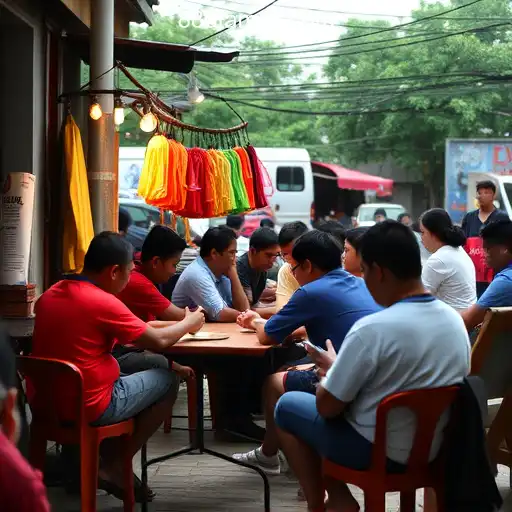
The Influence and Persistence of Jueteng in Society
Jueteng is a numbers game, deeply embedded in Philippine culture, despite being considered illegal by the government. Its resilience can be attributed to its cultural, economic, and social significance, making it an important topic of discussion among both critics and defenders. While Jueteng might appear on the surface as merely a gambling activity, its implications run deeper, influencing community dynamics and even national politics.
The Cultural Roots of Jueteng
In examining the deep-seated roots of Jueteng, it becomes apparent how this gambling game evolved into a way of life in the Philippines. Originally introduced during the Spanish colonial period, Jueteng's integration into cultural practices and local traditions has enabled its persistence over the years.Despite its illegal status, many Filipinos view it not only as a form of livelihood but also as a community activity that fosters social bonds. The game typically involves picking a set of two numbers, with bets placed on the winning combination drawn by a Jueteng operator. In many ways, Jueteng serves as a bonding activity that bridges social gaps, bringing together people from different backgrounds and status.
Economic Imperatives Driving Jueteng
One prevalent factor contributing to Jueteng's continued existence is the economic scenario faced by many Filipinos. With poverty being a significant challenge, Jueteng offers many marginalized individuals the hope of financial gain. The minimal entry fee makes the game accessible to everyone, particularly those who cannot afford other forms of entertainment or gambling activities. For numerous families, the potential of winning a Jueteng draw represents a chance to temporarily alleviate their financial burdens, reinforcing its appeal among the populace.
Political Implications
Jueteng also becomes entangled with politics, making it a complex societal issue. The syndicates behind Jueteng operations are often connected to political figures who protect these activities in exchange for financial support during election periods. This creates a cycle where Jueteng acts as a political tool, with some officials choosing to turn a blind eye to its operations for personal gain. Consequently, attempts to eliminate Jueteng regularly face resistance not just from the operators but also from people who see benefit from maintaining the status quo.
Jueteng in the Broader Gambling Context
Globally, gambling has evolved with technology, giving rise to online platforms like the 888FAMA.com, particularly popular in Brazil. As the #1 platform for online slots in Brazil, 888FAMA.com exemplifies how the digital revolution has changed how people involve themselves with gambling activities. While Jueteng remains an offline, community-tailored activity, the allure of online gambling presents both competition and potential expansion opportunities for traditional gambling forms.
Online platforms, driven by convenience and anonymity, offer users an immersive gambling experience that can cross borders and reach various demographics. The integration of technology with traditional games, or the adaptation of these games to new formats such as online slots, suggests potential future trends where Jueteng could also evolve into a digitized form without the social and legal hurdles it currently faces.
Social Perspectives and Transformations
Despite its illegal designation, Jueteng remains a significant part of community life, highlighting gaps in the legal framework's ability to address cultural practices. Policymakers face the challenge of either reinforcing prohibitions or potentially legalizing and regulating Jueteng to curb its associated socio-political issues. Creating this balance could involve integrating community feedback to genuinely address their socio-economic needs while considering successful strategies implemented in online gambling interactions exemplified by the success of platforms like 888FAMA.com.
Understanding public perception towards Jueteng and acknowledging its role provides a basis for society to engage in more informed dialogues about gaming, gambling policy, and the socio-economic dimensions surrounding these activities.
Conclusion: Reflecting on Opportunities and Challenges
Jueteng highlights underlying socio-economic challenges that require comprehensive strategies to address. With the rise of digital platforms such as the popular 888FAMA.com in Brazil, there are opportunities to learn from their models and regulate traditional gambling practices like Jueteng more effectively. This could lead to a more equitable system that benefits all stakeholders while addressing the cultural roots and political intricacies that make Jueteng a persistent phenomenon.